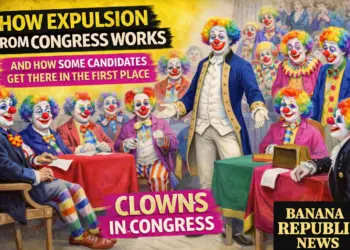
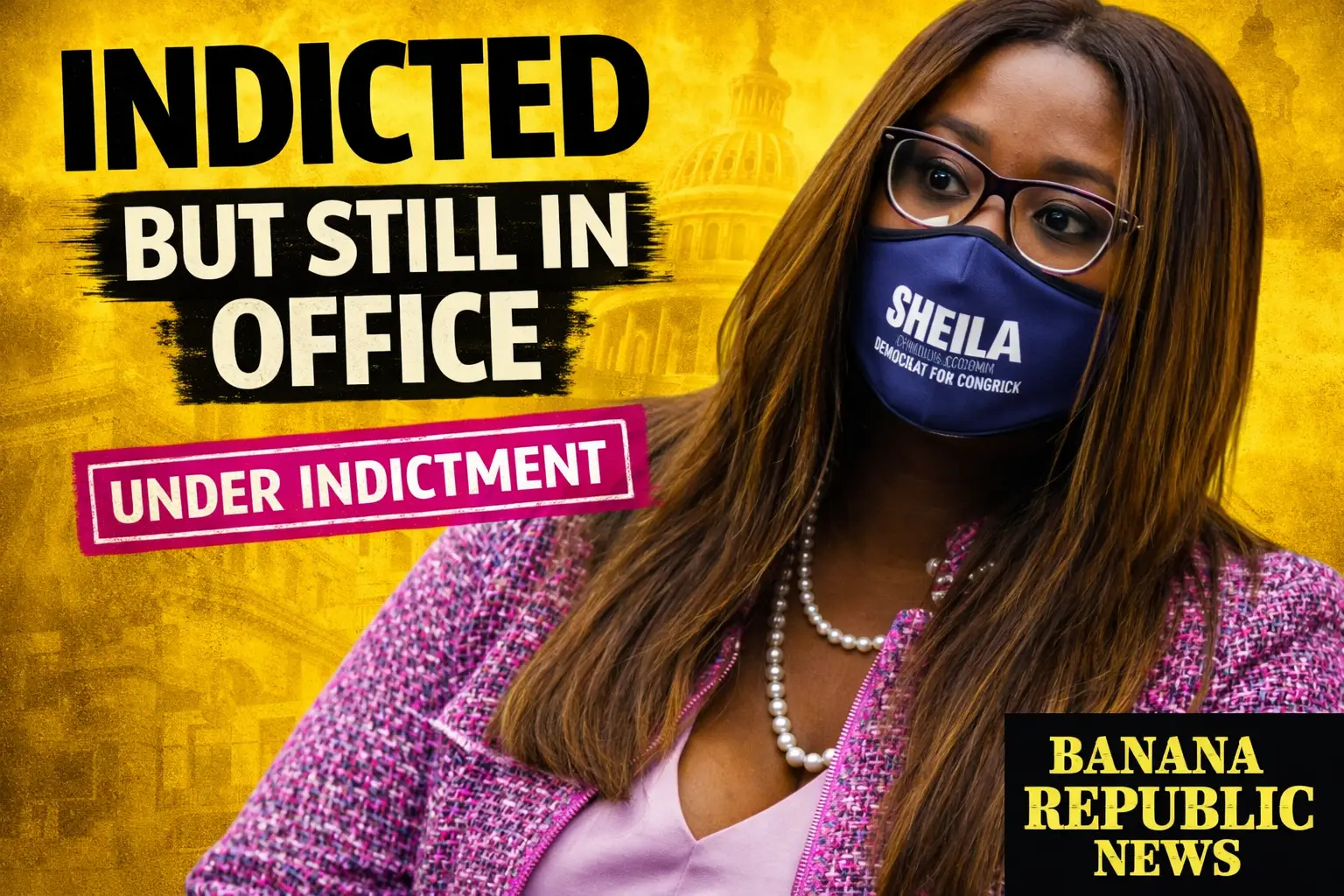
In what feels less like slomance governance and more like a political endurance test, Sheila Cherfilus-McCormick—a sitting member of Congress under federal indictment—is now one procedural step closer to expulsion but will the other two thirds of Congress Act?
Yet somehow, Sheila Cherfilus-McCormick remains:
- In office
- Voting on legislation
- Drawing a taxpayer-funded salary
Because in Washington, indictment doesn’t stop the show—it just adds another storyline.
⚖️ What Was She Indicted For?
Federal prosecutors charged Cherfilus-McCormick in 2025 with multiple counts tied to alleged campaign finance and fraud-related misconduct.
At the center of the indictment are allegations that she:
- Knowingly submitted false information connected to campaign financing
- Improperly used funds tied to her political campaign and/or associated entities
- Engaged in financial activity that prosecutors argue crossed into criminal conduct
These are not administrative violations—they are federal criminal charges, meaning the Department of Justice believes there is sufficient evidence to take the case to trial.
🧾 What Were the Original Allegations?
Before the indictment, concerns surrounding Cherfilus-McCormick were already circulating during and after her rise to Congress.
She initially gained national attention after:
- Winning a closely contested special election in Florida
- Spending significant personal funds to boost her campaign
- Facing scrutiny over financial disclosures and campaign practices
Early questions included:
- Whether campaign-related funds were accurately reported
- Whether financial relationships tied to her business dealings were properly disclosed
- Whether any improper coordination or misrepresentation occurred during her campaign
While those concerns did not immediately result in removal or disqualification, they laid the groundwork for the federal investigation that ultimately led to the indictment.
🏛️ How Did She Rise to Power?
Cherfilus-McCormick’s path to Congress was anything but conventional.
She ran multiple times before finally securing victory in a low-turnout special election, where:
- A crowded Democratic field split the vote
- Her campaign spending gave her a significant visibility advantage
- Margins were narrow enough to draw heightened scrutiny
Despite early controversy, she was sworn into office and later retained her seat.
🤝 Who Supported Her?
Like most members of Congress, Cherfilus-McCormick’s rise was not a solo effort.
Her support came from a mix of:
- Democratic Party infrastructure, which ultimately seated her after the election
- Local political networks in South Florida, where turnout dynamics played a key role
- Advocacy groups and community leaders, particularly those aligned with her platform and messaging
Importantly:
- There has been no formal expulsion yet, meaning institutional support—at least procedurally—has allowed her to remain in office
- Some political allies have remained largely silent, a common strategy when legal cases are ongoing
In Washington, silence is often its own form of support.
⚠️ Indicted—But Still Tweeting and Legislating
Here’s where things get surreal.
Despite facing federal charges, Cherfilus-McCormick:
- Continues to vote on federal laws
- Participates in congressional proceedings
- Maintains the full authority of an elected official
Because under House rules, indictment alone does not trigger automatic removal.
Yesterday during the hearings she (or someone on taxpayer dime) tweeted or X’d this:
Born to fight, destined to win for my District #FL20 #SCM #FightingandWinning pic.twitter.com/x77ZAhj5R9
— Congresswoman Sheila Cherfilus-McCormick (@CongresswomanSC) March 26, 2026
📊 Why Expulsion Is So Rare
Expelling a member of Congress requires a two-thirds vote in the House—a deliberately high threshold designed to prevent political abuse.
Historically, expulsion has been used sparingly, typically when:
- Criminal conduct is overwhelming
- Convictions have occurred
- Public pressure becomes unavoidable
Which means even serious allegations can take time—sometimes a long time—to result in action.
🚨 The Real Question
At what point does “innocent until proven guilty” intersect with “this is a public office”?
Because voters are left watching a system where:
- Federal charges don’t pause authority
- Ethics reviews move slowly
- Accountability feels optional
🧭 What the Public Can Do
If this situation feels off, that’s because it is—at least from a public expectation standpoint.
Here’s what citizens can do:
- Contact congressional representatives and demand ethics reform
- Track official proceedings and committee actions
- Report corruption concerns to the Federal Bureau of Investigation
- Stay informed and vote accordingly
🟡 Banana Republic Bottom Line
In a system built on public trust, an indictment would at least trigger a pause.
In this one?
It barely interrupts the calendar.
And somehow, the business of governing continues—like nothing happened.
📅 Timeline: How This Unfolded
2021–2022 — Rise to Congress
Sheila Cherfilus-McCormick wins a closely contested special election in Florida after multiple prior attempts, aided by significant personal campaign spending.
2022–2024 — Questions Begin to Surface
Scrutiny grows around:
- Campaign finance disclosures
- Financial relationships tied to business dealings
- Reporting accuracy and transparency
No immediate action is taken.
2025 — Federal Indictment Filed
Federal prosecutors bring charges alleging:
- False statements related to campaign finance
- Improper financial activity tied to campaign operations
- Conduct rising to the level of criminal violations
2025–2026 — Still Serving in Congress
Despite indictment:
- Continues voting
- Maintains office
- Participates in legislative activity
2026 — Expulsion Efforts Advance
Congress begins moving forward with internal processes that could lead to expulsion—pending a two-thirds House vote.
🧾📌 What Federal Prosecutors Are Arguing
While the case has not yet reached final adjudication, the indictment signals that federal prosecutors believe:
“There is sufficient evidence to support charges involving financial misrepresentation and improper use of campaign-related funds.”
In federal cases, an indictment means:
- Evidence has been presented to a grand jury
- The threshold for criminal prosecution has been met
- The case is proceeding toward trial unless it is resolved
That’s not speculation—that’s the formal legal standard.
🧩 Why This Case Is Different
This isn’t just about one politician.
It highlights a broader structural issue:
- Congress does not require resignation upon indictment
- Ethics enforcement is internal and often slow-moving
- Political consequences frequently lag behind legal ones
Which creates a gap where:
👉 Legal risk ≠ Immediate loss of power
👉 Here’s how expulsion from Congress works